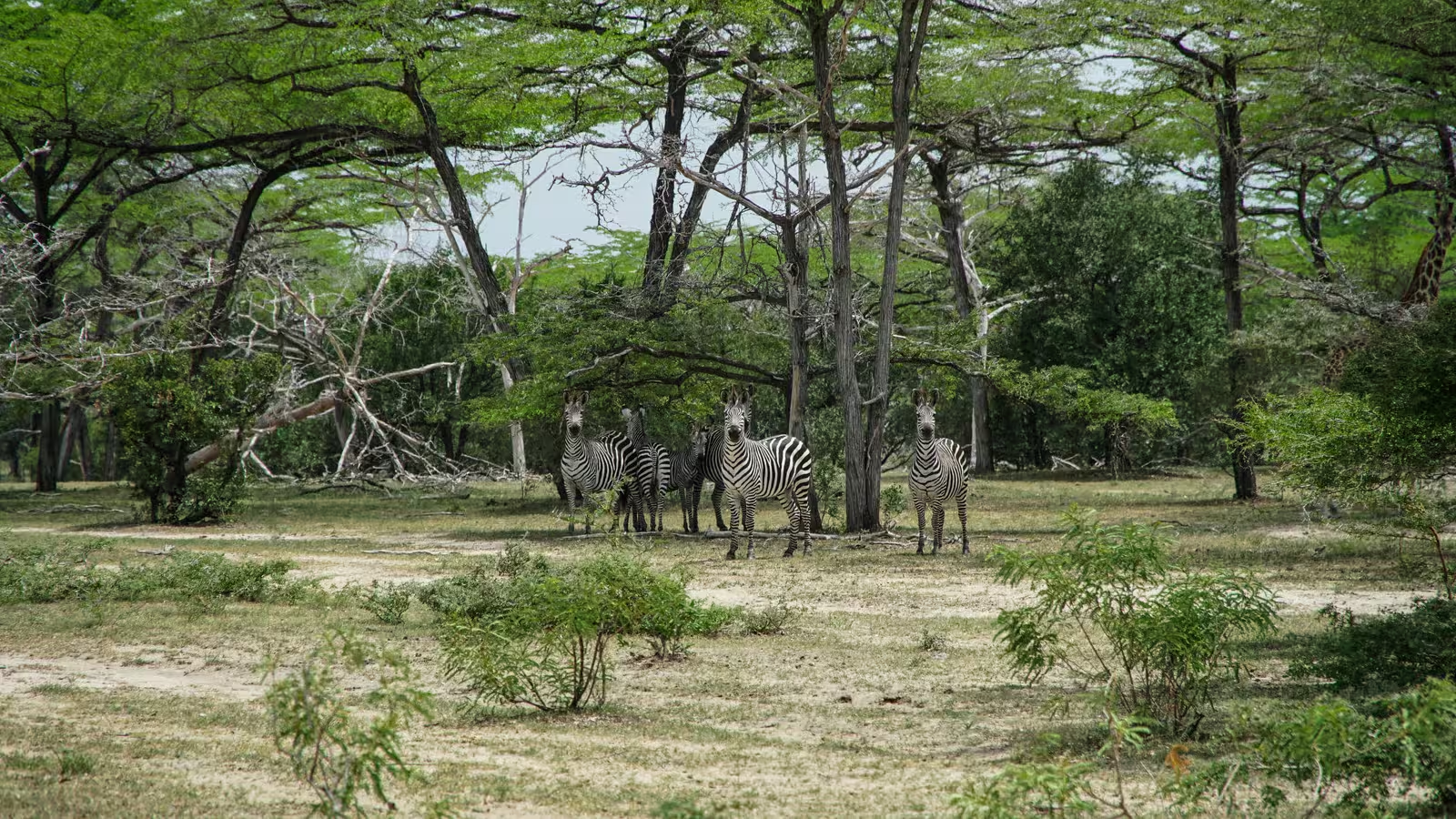
There are perhaps a dozen places left on the African continent where the wilderness is genuinely wild — where the animals have not adjusted their behaviour around tourist vehicles, where you can drive for a full day without crossing another set of tyre tracks, where the silence at night is so absolute it has weight. Katavi is one of them. Most safari travellers will never go. Those who do come back changed.
In the dry season, the Katuma River and Lake Chada shrink dramatically, concentrating wildlife around dwindling water in densities that are difficult to comprehend. Pools that once spread across the floodplain become mud baths packed with hundreds of hippos piled on top of each other — one of the natural world's most extraordinary spectacles. Crocodiles aestivate, packed wall to wall in mud burrows. Elephants gather in herds of two hundred, three hundred, sometimes more.
"The most beautiful safari I have ever done. The hippo pools have to be seen to be believed."
In the wet season the whole landscape transforms. The floodplains flood. The grass is shoulder-high. The hippos disperse. The roads become impassable. The lodges close. For half the year, Katavi is empty even of safari operators.
This is not Serengeti. There are no migration herds, no tourist crowds, no five-star lodges with infinity pools. Katavi is for the safari traveller who has been everywhere else — who wants to experience how the great African wildernesses really felt before they became tourist destinations. It is wild, raw, slightly uncomfortable, deeply rewarding.