Where the wind
meets the reef
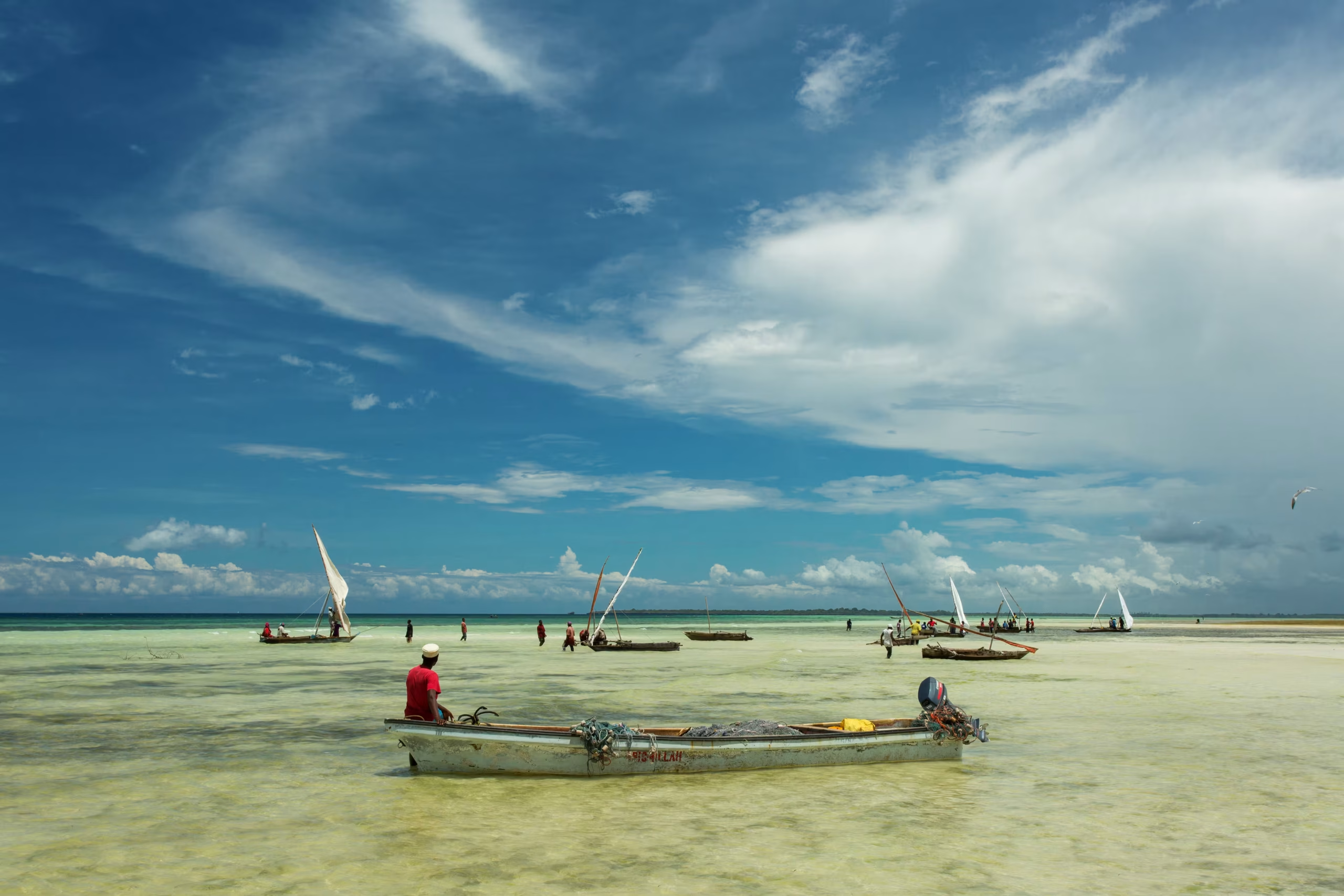
Paje and Jambiani on Zanzibar's east coast are the kitesurfing capitals of East Africa and the bohemian alternative to Nungwi's resort beaches. Long stretches of white sand, dramatic tidal variation, palm-thatched bars, and a more authentic local feel.
A different rhythm,a different kind of beach
Paje and Jambiani sit on Zanzibar's long, exposed east coast — facing the open Indian Ocean and trade winds that blow reliably between the kite seasons. Paje is the island's undisputed kitesurfing capital; world-class operators, beginner-friendly lagoons protected by a reef 1 km offshore, and a young, international beach scene.
Jambiani, immediately south, is the quieter, more traditional alternative — a long Swahili village stretched along ten kilometres of beach. Boutique guesthouses sit alongside fishermen's homes, sea-grass collectors gather seaweed at low tide for export to Japan, and resorts are smaller, more design-led, and noticeably less expensive than the north coast.
The east coast experiences dramatic tidal variation: at low tide the sea retreats hundreds of metres beyond the reef, exposing sand flats where sea grass farmers harvest and shells can be collected. At high tide, the sea returns to within metres of the beach. This rhythm gives the east coast its character — not better or worse than the north, but very different. Plan your day around the tides, and you will love it.
Six experiences,six different days
Kitesurfing lessons or rentals
Paje's shallow reef-protected lagoon is one of the best beginner kite spots in the world. Half a dozen IKO-certified schools (Paje by Kite, Aquaholics, Zanzibar Kite Paradise). Lessons from beginner to advanced.
The Rock restaurant
Iconic restaurant built on a small rock outcrop just offshore from Pongwe (15 minutes north of Paje). At low tide you walk; at high tide you take a small boat. Reserve weeks ahead.
Sea-grass tour with local women
Half-day immersion with the women of Jambiani who harvest seaweed at low tide for export to Asian cosmetics industry. Educational, authentic, and supports local livelihoods.
Mtende beach & blue lagoon
A 30-minute drive south from Jambiani, this hidden beach at low tide reveals a natural pool of brilliant turquoise water surrounded by white sand. Often you have it to yourself.
Spice and forest tour
The east coast is closer to the centre of Zanzibar's spice plantations and the Jozani Chwaka Bay forest, home to the endemic Zanzibar red colobus monkey. Combined day trip from $40.
Local cooking class
Several Paje and Jambiani guesthouses offer cooking lessons with local women — pweza wa nazi, biryani, chapati from scratch. Genuinely insightful into Swahili food culture.
Three tiers,three philosophies
Demani Lodge, Casa del Mar, Lost & Found
Smaller boutique guesthouses — beachfront, palm-thatched, often locally owned. The east coast specialty. From $60-90/night.
Upendo Beach Resort, Paje by Night, Tulia Zanzibar
Stylish design-led mid-range properties with infinity pools, full restaurant, well-located on the beach. Tulia is adults-only. From $200/night.
Zuri Zanzibar, Konokono Beach Resort
High-end design boutique. Konokono's overwater bungalows are unique on the east coast. From $400/night.
The seasonsthat matter
East coast is best for kitesurfing during the trade-wind seasons: mid-June to mid-September (kaskazi monsoon) and mid-December to mid-March (kusi monsoon). Between seasons (Apr-May, Oct-Nov), winds are unreliable.
The thingsyou actually need to know
How to arrive
Paje and Jambiani are 50-70 minutes from Stone Town and the airport by road ($40-55 by taxi). All accommodation arranges transfers. The road is good; the final 200m to beach accommodation may be sandy track.
What to eat
East coast has its own food scene. Try Mr Kahawa (best coffee shop on the east coast), Paje by Night for sundowners, Mango Beach Bar Jambiani, and the ubiquitous beachside grills for fresh-caught fish and lobster.
Etiquette
Jambiani especially is a working village — please dress modestly when walking outside hotel grounds, particularly through residential areas. Swimwear is fine on hotel beaches.
Things travellersoften ask
Add Paje & Jambianito your safari
Most of our travellers combine Paje & Jambiani with a mainland safari. Tell us your dates and dream and we will design the rest.