Heaven Getaway

The Africa few will ever see

A wildernessalmost no one visits

Western Tanzania, far beyond the circuit

There are perhaps a dozen places left on the African continent where the wilderness is genuinely wild — where the animals have not adjusted their behaviour around tourist vehicles, where you can drive for a full day without crossing another set of tyre tracks, where the silence at night is so absolute it has weight. Katavi is one of them. Most safari travellers will never go. Those who do come back changed.

In the dry season, the Katuma River and Lake Chada shrink dramatically, concentrating wildlife around dwindling water in densities that are difficult to comprehend. Pools that once spread across the floodplain become mud baths packed with hundreds of hippos piled on top of each other — one of the natural world's most extraordinary spectacles. Crocodiles aestivate, packed wall to wall in mud burrows. Elephants gather in herds of two hundred, three hundred, sometimes more.

"The most beautiful safari I have ever done. The hippo pools have to be seen to be believed."

In the wet season the whole landscape transforms. The floodplains flood. The grass is shoulder-high. The hippos disperse. The roads become impassable. The lodges close. For half the year, Katavi is empty even of safari operators.

This is not Serengeti. There are no migration herds, no tourist crowds, no five-star lodges with infinity pools. Katavi is for the safari traveller who has been everywhere else — who wants to experience how the great African wildernesses really felt before they became tourist destinations. It is wild, raw, slightly uncomfortable, deeply rewarding.
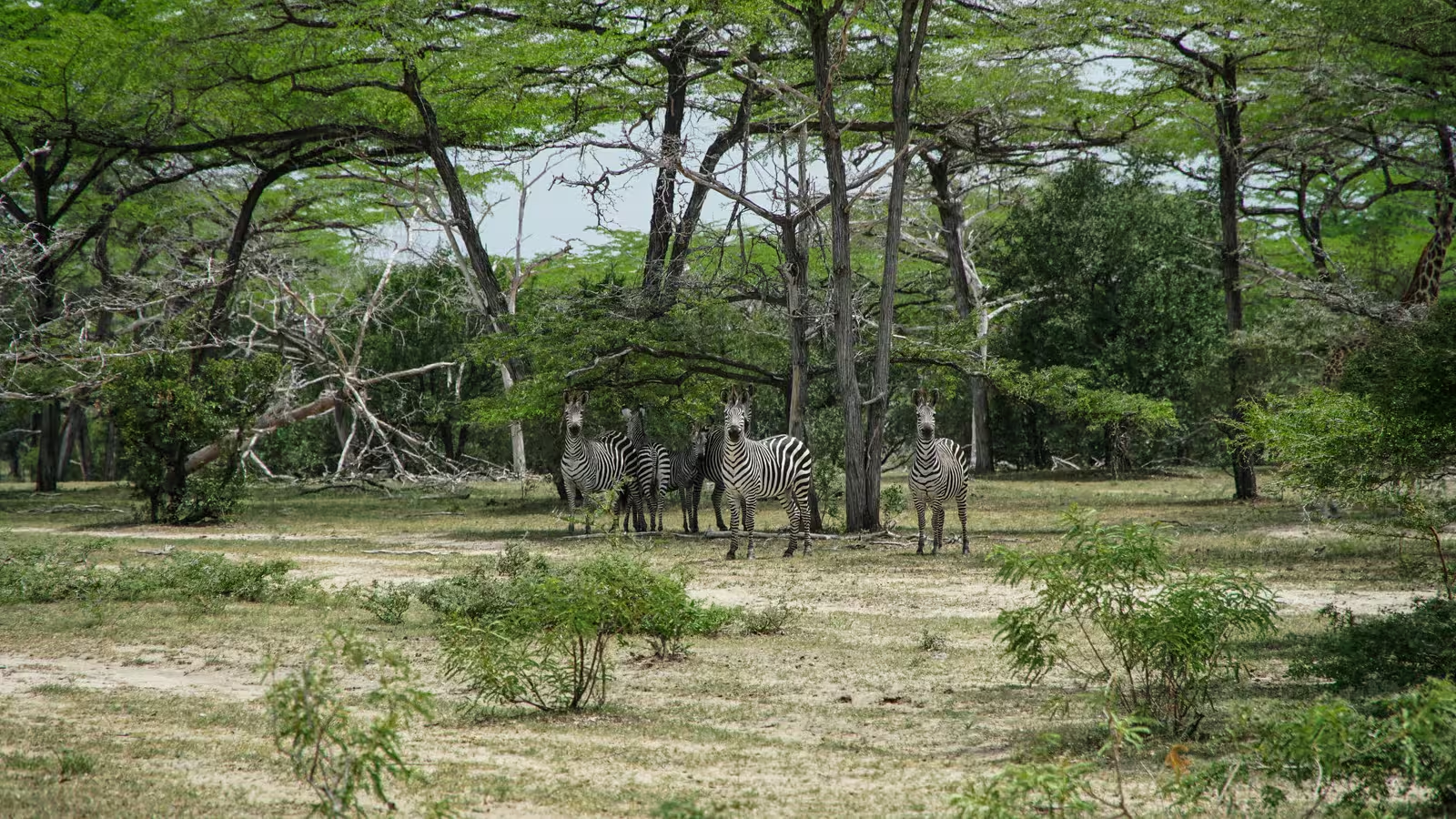
Hero background
Western Tanzania · Remote Wilderness

Katavi
National Park

the wild edge

Tanzania's third-largest national park and one of the most pristine wilderness areas left in Africa — vast floodplains, dense miombo woodland, and concentrations of hippos so extreme they have become the stuff of safari legend. Fewer than 1,500 visitors come here each year.

4,471sq km
<1,500visitors yearly
4,000+hippos
1974gazetted
400+bird species
Scroll
The dry-season concentrations

When the waterruns out

Katavi's defining feature is the dry-season concentration of wildlife around shrinking water sources. By October, the Katuma River has reduced to a series of disconnected pools — and the wildlife densities around them are simply unlike anywhere else.

Hippo super-pods

200+ in a single pool

In the dry season, hippos pack into the remaining pools so densely they overlap. The smell, the sound, the sheer biomass — unforgettable.

Elephant herds

Hundreds at a time

Massive bachelor groups and mega-herds congregate around the few permanent water points. Some of the largest elephant aggregations in East Africa.

Mud-burrowed crocs

Wall-to-wall reptiles

When the river dries, the crocodiles dig burrows into the mud banks and pack in together — sometimes hundreds in a single bank.

Big buffalo herds

1,000+ on the move

Buffalo herds of a thousand or more are routine in dry-season Katavi. Pride of lions follow them. Predation events are frequent and dramatic.

Why visit Katavi

A wildernesstruly untouched

Katavi is not for everyone. But for the traveller who has done the rest, who wants to know what Africa really felt like before everyone got here, there is nowhere better.

No. 01

Almost zero other visitors

You will see more lions than other vehicles. Most days you will see no other tourists at all. The wilderness is yours.

No. 02

The hippo pools

The dry-season concentrations are unique to Katavi. Two hundred hippos in one pool is a sight you will not see anywhere else in Africa.

No. 03

Vast undisturbed landscapes

Floodplains as far as the eye can see. Miombo woodland that stretches to the horizon. The scale of true wilderness.

No. 04

Walking safaris that feel real

Because there is no traffic and no tourist roads, walking safaris in Katavi feel like genuine exploration. Lead guides are exceptional.

No. 05

Old-school camp atmosphere

The two main camps are run by people who chose Katavi specifically because it isn't a tourist circus. The conversation around the fire is exceptional.

No. 06

Pair with Mahale

Most travellers combine Katavi with Mahale Mountains for the ultimate western Tanzania experience — wilderness savannah plus chimpanzees plus Lake Tanganyika.

Concentrations and predators

What lives inwild Katavi

A classic East African ecosystem in extreme concentration. Lions, elephants, buffalo, crocodiles, antelope species you will see nowhere else — and bird life that fills the floodplains in their tens of thousands.

Hippopotamus

Hippopotamus

200+ in a single pool

African Lion

African Lion

Prides 15–20 strong

African Elephant

African Elephant

Massive dry-season herds

Cape Buffalo

Cape Buffalo

Mega-herds of 1,000+

Roan & Sable

Roan & Sable

Katavi specialities

Nile Crocodile

Nile Crocodile

Wall-to-wall in burrows

Topi

Topi

Russet-and-purple antelope

Wattled Crane

Wattled Crane

Floodplain bird life

When to Visit

Every month tellsa different story

Katavi National Park rewards every season — but each month brings a different face. Here is a month-by-month guide to plan your visit.

Jan

Wet & green

Lush, beautiful, but most roads impassable. Camps closed.

Feb

Peak wet

Floodplains under water. Wildlife dispersed. Camps closed.

Mar

Wet

Heaviest rains. Closed season for tourism.

Apr

Rains end

Roads still difficult. Most camps closed. Reopening late.

May

Drying begins

Camps reopen. Wildlife starting to concentrate.

Jun

Excellent

Drying landscape. Wildlife concentrating. Cool temperatures.

Jul

Peak begins

Hippo concentrations forming. Big game readily seen.

Aug

Peak conditions

Outstanding wildlife concentrations. Hippo pools dramatic.

Sep

Peak intensifies

The most extreme concentrations. Hippo super-pods peak.

Oct

Climactic

Maximum drama. Hot days, extreme densities. Classic Katavi.

Nov

First rains

Tension breaks. First storms arrive. Wildlife disperses.

Dec

Closing

Most camps closing for the wet season.

Peak season Shoulder / green season
6 iconic experiences
Things to Do

The Katavi
experience in full

6 iconic ways to immerse yourself in this extraordinary wilderness — each one chosen for what makes Katavi unique.
Hippo Pool Game Drives Activity 01

Hippo Pool Game Drivesthe unmissable spectacle

In the dry season, dedicated drives to the dwindling pools where hippo, crocodile, elephant and buffalo concentrate in extraordinary numbers. The Katisunga and Katuma pools are the famous ones. The atmosphere — and the smell — are unlike anywhere else in Africa.

Duration4–5 hrs
SeasonJul–Oct
BestLate afternoon
Walking Safaris Activity 02

Walking Safarisold-school exploration

Katavi is one of the great walking parks. Because there is so little vehicle traffic, the wilderness feels intact. Multi-hour walks with armed scouts and senior guides, often tracking lion, elephant or buffalo on foot.

Duration3–4 hrs
DifficultyModerate
Min age12 years
Fly Camping Activity 03

Fly Campinga night in the wild

Multi-day or single-night fly camping deep in the park. Light expedition tents, simple cooking on the fire, sleeping out where the only sounds are lions calling and hippos grunting. The most immersive way to experience Katavi.

Duration1–3 nights
InclusionCamp + guide
BestAug–Sep
Floodplain Drives Activity 04

Floodplain Drivesbig skies, big animals

The Katisunga and Chada floodplains in the dry season are open, vast, and full of game. Lion prides on the move with buffalo, elephant herds in the open, topi and impala in their thousands. Slow, patient drives across enormous landscapes.

DurationFull day
VehiclesOpen 4x4
HighlightPredator-prey
Night Drives Activity 05

Night Drivesa different ecosystem

Most parks ban night drives. Katavi permits them. With spotlights you find serval, civet, genet, white-tailed mongoose, occasional leopard, and active prides of lion. A completely different cast of characters from the daytime park.

Duration2–3 hrs
SeasonYear-round
CostSupplement
Birding the Floodplains Activity 06

Birding the Floodplainsa paradise on water

In the wet season, the floodplains hold tens of thousands of waterbirds — pelicans, storks, herons, cranes, ducks. Specialist birding drives and walks with knowledgeable guides. Over 400 species recorded in the park.

Duration3–4 hrs
BestNov–Mar
GuidesSpecialist
01 / 06
Where to Stay

From luxury tents toauthentic camps

Katavi National Park offers accommodation across three tiers — from honeymooners chasing five-star indulgence to authentic, value-driven experiences. We work across all tiers and choose for fit, not for commission.

Chada Katavi & Mbali Mbali Katuma
— Tier 01 · Luxury

Chada Katavi & Mbali Mbali Katuma

From $1,100 / night

Two small, beautifully designed camps that have defined the Katavi experience for over two decades. Chada Katavi (Nomad) is six tents on the edge of the Katisunga floodplain — old-school explorer style, exceptional guides. Mbali Mbali Katuma is similar in scale and quality. Both seasonal (June–November).

  • Chada Katavi (Nomad)
  • Mbali Mbali Katuma
  • 6–8 tents each
  • All inclusive
Limited mid-tier options
— Tier 02 · Mid-range

Limited mid-tier options

From $480 / night

Katavi has very few mid-range options — the remote location and seasonal nature of the park mean operators tend to commit to the luxury end or not at all. We can sometimes arrange mid-tier mobile camping with our long-term partners.

  • Mobile tented camps
  • Limited seasonal options
  • Pre-book months ahead
TANAPA Bandas & Camping
— Tier 03 · Budget-Authentic

TANAPA Bandas & Camping

From $40 / night

Park-managed basic bandas and several official campsites scattered through the reserve. Self-catering only — you need to bring all supplies from Mpanda town. Used mainly by overland expeditions and the most independent travellers.

  • Sitalike Bandas
  • Park campsites
  • Self-catering only
Getting There

By airor by road

Katavi is one of the most remote national parks in Tanzania. Almost all guests arrive by light aircraft — the road journey is several days of difficult driving and is not recommended for most travellers.

By Air

The only practical route

Scheduled charter flights from Arusha (3 hours) or Dar es Salaam (3.5 hours) via Tabora or Ruaha. Carriers: Safari Air Link, Coastal, Auric Air. Most flights run 4–5 days a week in season.

By Road

For expedition-style travel

Multi-day overland journey from Dar es Salaam or Mbeya, via Mpanda. Long, dusty, slow. Suitable for hardcore travellers with private vehicles and serious time.

Combine with Mahale

The classic pairing

A 90-minute charter connects Katavi and Mahale — making the western Tanzania circuit one of Africa's great rare itineraries.

Entry Fees

TANAPA + concession

Park entry: $50 per adult per day. Concession fees may apply at certain camps. All included in standard luxury packages.

Frequently Asked

Practicalquestions

Twenty years of guiding Katavi National Park means we have answered these questions many times. If you have a question we haven't covered, our team replies to every enquiry within 24 hours.

Minimum 3 nights, ideally 4. Katavi is remote and the journey in and out takes time. A 3-night stay gives you 2 full days of game viewing plus walking; 4 nights lets you really settle in. Less than 3 is a wasted journey.
Late June through October is the prime season. August and September are the peak for hippo pool concentrations. November can be excellent but the rains can arrive anytime. April and May the park is largely closed.
Honestly, it is expensive. The remote location and small lodge capacities mean luxury tariffs from $1,100/night and difficult to substantially reduce. Mid-range options are very limited. Plan budget carefully or pair with cheaper destinations.
Probably not the first park to visit. Katavi rewards travellers who have done some safaris already and know what they want. First-time safari guests are usually better served by the northern circuit then visiting Katavi on a second or third trip.
Most camps have minimum ages of 12 or 16 due to walking safaris and remote location. Children below those ages can sometimes be accommodated by private arrangement — discuss with us.
Katavi + Mahale + sometimes Gombe. A 7–10 day expedition that combines wilderness savannah, primates, and the second-deepest lake in the world. One of Africa's great under-known itineraries. We design these on a custom basis.
For the seasoned traveller

Your Kataviawaits

Katavi is not for everyone. For the few it is for, it becomes a favourite — the safari they tell their friends about for years. Tell us when you would like to travel, and we will design something exceptional.