Heaven Getaway

Hero background
Lion · Leopard · Elephant · Buffalo · Rhino

The five animals
that built the safari

the original quest

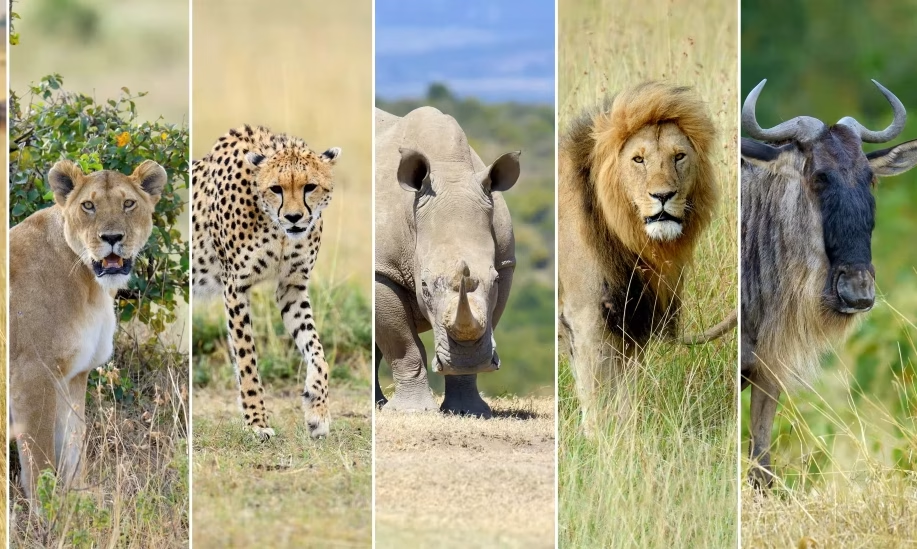
The phrase "Big Five" was coined by 19th-century hunters for the five animals hardest to track on foot. Today it is the safari traveller's checklist — and Tanzania is one of the very few countries where you can realistically see all five in a single trip.

5Iconic species
11Parks for spotting
99%See lion
70%See leopard
NgorongoroBest for rhino
Scroll
The five animals

Why the Big Fivestill matters

The Big Five is no longer about hunting — it is the most useful shorthand a first-time safari traveller can use to plan their trip. Lion, leopard, elephant, buffalo and rhino represent the broadest possible cross-section of African wildlife: a social cat, a solitary cat, a megaherbivore, a dangerous herd animal, and the rarest of all. To see them all on one trip, you need to choose parks carefully.

In Tanzania, four of the five are almost guaranteed on any well-designed northern circuit safari. Lion is found in every major park. Elephant herds dominate Tarangire and the Serengeti. Buffalo are abundant in Manyara, Tarangire and the Crater. Leopard takes patience but is reliable in the Seronera valley of the Serengeti and the riverine forests of Manyara. The fifth — black rhino — is where things become specific.

There are only about 35 black rhinos in Ngorongoro Crater, a few hundred in the Serengeti, and small populations elsewhere. The Crater is the most reliable place to see one in Tanzania, often at distance. We design every Big Five itinerary around the rhino question — usually adding a full day in the Crater specifically for the rhino chance.

The dimensions

What makes thisexperience itself

01

Lionpanthera leo

The most-seen big cat. Tanzania has the highest lion population of any country (over 15,000). Major prides found in Serengeti, Ngorongoro, Ruaha. Best spotted at dawn and dusk.
02

Leopardpanthera pardus

The most elusive of the Big Five but consistently seen in the Seronera valley of central Serengeti and the riverine forests of Manyara. Hunts at night, often draped in acacia trees by day.
03

Elephantloxodonta africana

African bush elephants in Tanzania are still numerous despite poaching pressure. Tarangire alone hosts 3,000+ in the dry season — the largest concentration in northern Tanzania.
04

Cape Buffalosyncerus caffer

Considered the most dangerous of the Big Five (more deaths than lion). Massive herds in Tarangire, the Crater, and the Serengeti. Best photographed in early morning light.
05

Black Rhinodiceros bicornis

The hardest. Around 35 in Ngorongoro Crater, a few hundred in Serengeti (mostly Moru kopjes). Plus the famous Mkomazi rhino sanctuary. Distant viewings are the norm — every sighting is a win.
Best time

June-October (dry season) — animals concentrate at water sources, vegetation thins, and visibility improves. Big Five sightings peak in August-September.

Practical matters

What thisactually involves

Duration
7-10 days minimum for a real Big Five attempt
Budget
From $4,500 per person (comfort tier)
Best for
First-time safari-goers · Bucket-list travellers · Wildlife photographers
Type of trip
Lion · Leopard · Elephant · Buffalo · Rhino
An honest note

Black rhino is never guaranteed. We will tell you honestly if your dates and itinerary make a Big Five completion unlikely.

Common questions

Things travellersoften ask

On a 10-day northern circuit itinerary including Ngorongoro, we estimate around 70-80% chance of seeing all five. Lion, elephant, buffalo are near-guaranteed (99%, 95%, 95%). Leopard is around 70-75%. Black rhino is the variable — around 50% on a single day in the Crater, rising to 75% with two days. Longer trips and additional rhino-focused stops can push to 85%+.
About 1 in 4 safaris of 7+ days witness a predator kill or active hunt. Patient travellers who do full-day game drives and start before dawn see far more action than those who do half-day drives. We do not promise kills — but we position you for them.
Yes — the Big Five is family-friendly. Most safari lodges accept children from age 6 (some luxury camps from 8 or 12). Maasai-themed lodges and the Serengeti game drives are particularly child-friendly.
Both countries are safe and excellent. Tanzania has the larger lion population and arguably better elephant viewing; Kenya has the famous Mara crossings (which are actually in Tanzania's Serengeti at different times of year). Wildlife crosses freely between the two.
Other "5"s are marketing variants. The Small Five (rhino beetle, leopard tortoise, elephant shrew, ant lion, buffalo weaver) is a fun bonus to watch for. The Magnificent Seven (Big Five + cheetah + wild dog) is more substantive — and a 10-day Tanzania safari should aim for all seven, with wild dog being the hardest.
Plan this experience

Ready forbig five safaris?

Tell us your dates and what matters most. We design every Big Five Safaris itinerary personally.