Heaven Getaway

Hero background
Southern Tanzania · The Wild Heart

Ruaha
National Park

where the wild still rules

Tanzania's largest national park at 20,226 square kilometres — a vast, remote wilderness holding 10 per cent of the world's lions, the largest elephant population in East Africa, and bush so empty of people it can feel pre-human.

20,226sq km
12%world's lions
1964established
10,000+elephants
570+bird species
Scroll
The Land

The wildheart

"There is nowhere else in Africa with this much space, this much silence, this much wildness."
— Jonathan Scott

Ruaha is what Africa was. Tanzania's largest national park — 20,226 square kilometres of miombo woodland, kopje-studded plains, and the broad sandy bed of the Great Ruaha River — sits hundreds of kilometres from the nearest tourist trail, in the country's remote southern interior. Few visitors come this far. Those who do find some of the wildest, emptiest, most authentic African bush remaining anywhere on the continent.

The wildlife is staggering. Ruaha holds 10 per cent of the world's lions — perhaps 6,500 individuals running in some of the largest prides on Earth (up to 20 animals together). The largest elephant population in East Africa lives here: 10,000+ pachyderms, growing each year as Ruaha's population has not yet been hit by the poaching that has hammered northern parks. African wild dogs run in the woodlands. Leopards lounge on the kopjes. And both greater and lesser kudu, normally restricted to separate biogeographic zones, overlap here — making Ruaha one of the only places to see both species.

"There is more space and more wildness here than nearly anywhere else on Earth. Ruaha is what you imagined Africa would be — before you ever came to it."

But Ruaha is more than its wildlife. It is the landscape itself — the Great Ruaha River sweeping through the heart of the park, the granite kopjes rising like ancient sculptures from the plains, the baobab forests that turn silver-gold at sunset, and the silence that descends after dark. The night sky is as dark as anywhere on the planet. The Milky Way is genuinely a guiding light.

For travellers who have done the Northern Circuit and want something wilder — or for first-timers who want to skip the crowds entirely and dive straight into the deep end — Ruaha is the answer. It is the southern Tanzania experience at its purest: remote, raw, and almost unimaginably wild.
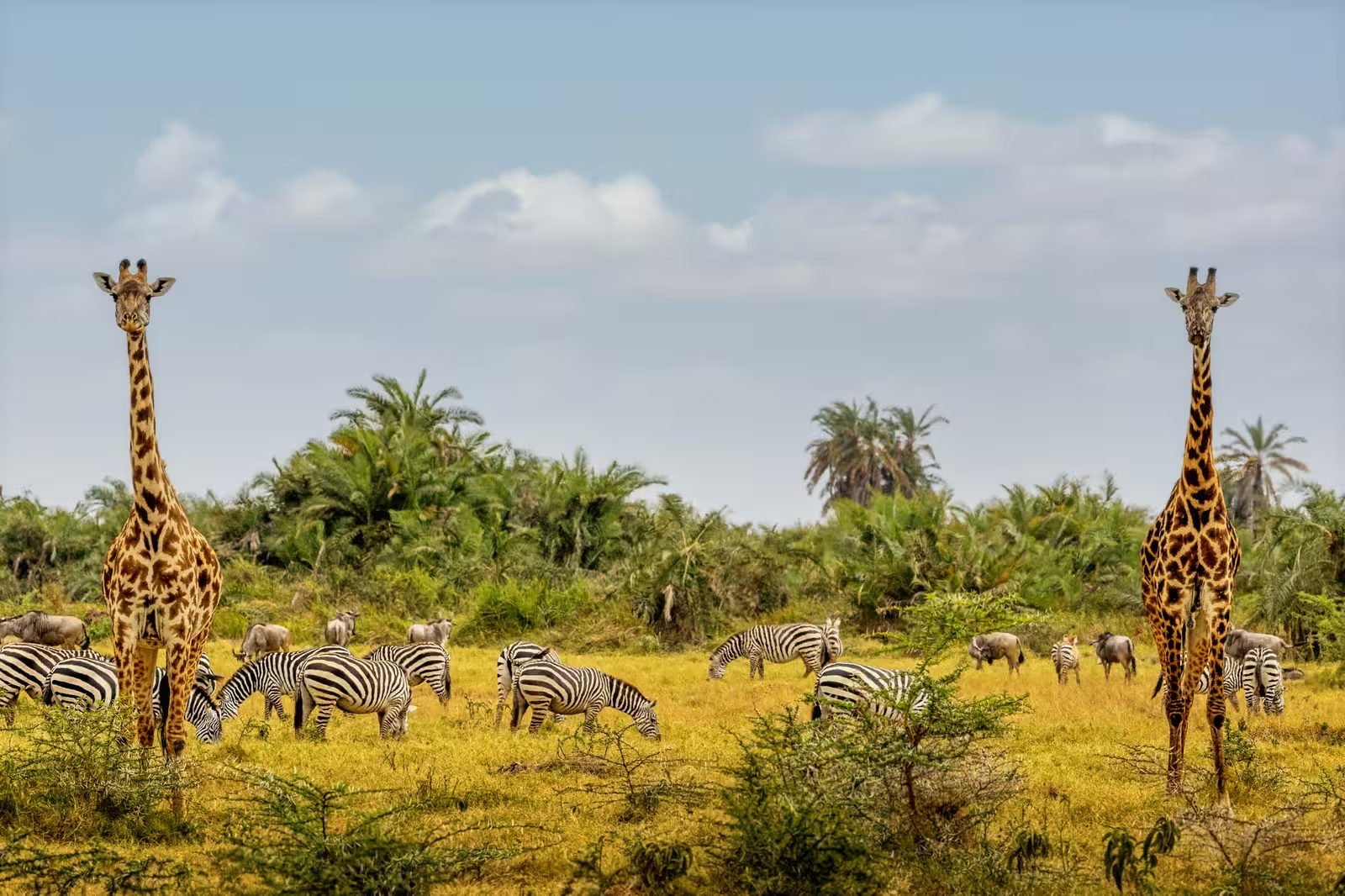
The Great Ruaha

A river thatshapes everything

The Great Ruaha River is the heart of the park — a wide, sandy-bottomed waterway that draws all of Ruaha's wildlife in the dry months. The river's seasons define the safari calendar.

Jun – Aug

Concentrations begin

The dry season builds. Elephants in growing herds along the riverbanks. Lions hunting along the sandy beds at dawn. Crocodiles and hippos in the remaining deep pools. Birds breeding in the riverine forests.

Sep – Oct

Peak intensity

The driest months. Wildlife concentrates at every remaining pool of water — elephant herds of 80+, buffalo herds of 500+, and lion prides patrolling the kills. Spectacular, exhausting, unforgettable.

Nov – Dec

Short rains

The first rains arrive. Wildlife begins to disperse from the river. The bush greens. Calving begins among impala and zebra. Predator activity remains excellent.

Jan – May

The green wilderness

Wet season. Most camps close (early Mar to late May). The park transforms — lush, dense, dramatic. Migrant bird species arrive. Quiet, beautiful, but logistically harder.

Why Ruaha

Six reasonsto come south

Ruaha is the connoisseur's safari — the park that returning safari travellers prioritise once they've done the basics. Here is why we believe it deserves to be on every serious safari list.

No. 01

10% of the World's Lions

6,500+ lions across the ecosystem — and pride sizes here are the largest in Africa, sometimes 20 animals strong. Mega-prides hunting buffalo make for spectacular viewing.

No. 02

Africa's Largest Untouched Elephant Population

10,000+ elephants — growing each year. Ruaha was spared the worst of the 2010s poaching wave, and bulls with massive sweeping tusks are common.

No. 03

Both Greater & Lesser Kudu

Ruaha is one of the only places on Earth where both kudu species overlap. The magnificent greater kudu (spiral horns, 1.5 metre tall) and the more skittish, smaller lesser kudu.

No. 04

Walking & Fly Camping

Walking safaris with armed rangers, fly camping under the stars, and remote bush experiences are central to the Ruaha offering — and routinely better than anywhere in northern Tanzania.

No. 05

No Crowds Whatsoever

Ruaha receives perhaps a quarter of the visitors of the Northern Circuit parks. Days go by without seeing another vehicle. The wilderness feels genuinely yours.

No. 06

Astronomical Dark Skies

Ruaha is one of the darkest sky areas on the planet. The Milky Way is genuinely a guiding light. Several lodges run astronomy programs with telescopes and astronomers.

The Wildlife

Crossroads oftwo ecosystems

Ruaha sits at the meeting point of East African and Southern African ecosystems — meaning you see species from both zones. The wildlife list is among the longest in Tanzania.

African Lion

African Lion

6,500+ in mega-prides

African Elephant

African Elephant

10,000+ pachyderms

Greater Kudu

Greater Kudu

Spiral-horned giant

Lesser Kudu

Lesser Kudu

Smaller cousin

Leopard

Leopard

Kopje specialists

African Wild Dog

African Wild Dog

Woodland packs

Cape Buffalo

Cape Buffalo

500-strong herds

Sable & Roan

Sable & Roan

Rare antelopes

When to Visit

Every month tellsa different story

Ruaha National Park rewards every season — but each month brings a different face. Here is a month-by-month guide to plan your visit.

Jan

Wet & green

Hot, lush, dramatic. Most camps closed Jan–May.

Feb

Closed period

Heaviest rains. Park largely inaccessible.

Mar

Closed period

Wet, lush. Spectacular skies. Most camps closed.

Apr

Closed period

Wet conditions ease late month. Camps still mostly closed.

May

Reopening

Camps back in business late month. Lush, beautiful.

Jun

Dry season opens

Vegetation drying. Wildlife moving toward river. Excellent value.

Jul

Excellent viewing

Cool, dry. Lion prides gathering. Wild dog dens.

Aug

Peak intensity

Best month for predator action. Cool nights.

Sep

Continued peak

Hot afternoons, beautiful evenings. Book ahead.

Oct

Late dry

The driest, most intense month. Wildlife at the river.

Nov

Short rains

Heat eases. Brief showers. Wildlife disperses.

Dec

Festive wet

Rains build. Lush, green, beautiful but quieter wildlife.

Peak season Shoulder / green season
6 iconic experiences
Things to Do

The Ruaha
experience in full

6 iconic ways to immerse yourself in this extraordinary wilderness — each one chosen for what makes Ruaha unique.
Game drives Activity 01

Game drivesacross the wild south

Half-day, full-day or extended game drives across Ruaha's vast network of tracks — searching for mega-prides of lions on the kills, elephant herds at the river, leopards on the kopjes, and the rare sable and roan antelopes.

Duration4–10 hrs
Best timeDry season
IncludedAll stays
Walking safaris Activity 02

Walking safariswith armed ranger

Walking is central to the Ruaha experience — guided half-day walks through miombo woodland and along the river. Tracks read by experienced guides, animal behaviour observed up close, and a sense of the bush you cannot get from a vehicle.

Duration3–4 hrs
DifficultyEasy/mod
IncludedMost stays
Fly camping Activity 03

Fly campingunder the dark skies

A guided night of fly-camping in a remote location — sleeping under a mosquito net with the world's darkest skies overhead. Bush dinner cooked over a fire, stories around the embers, the sounds of the wild night. Magic.

Duration1 night
WhereBush location
From$240pp
Night drives Activity 04

Night driveswith spotlight

In several private concessions adjoining the park, night drives reveal Ruaha's nocturnal life — leopards on the prowl, civets and genets, bushbabies, and the occasional aardvark. Spotlights operated by your guide.

Duration2.5 hrs
WhereConcessions
From$90pp
Bush astronomy Activity 05

Bush astronomydarkest skies in Africa

Several lodges run astronomy nights with telescopes and visiting astronomers. With no light pollution for hundreds of kilometres, Ruaha offers some of the darkest skies on the planet. The Milky Way is genuinely directional.

Duration2 hrs
WhereCamp
WhenNew moon
Bush dining Activity 06

Bush diningon the river

A private breakfast or sundowner on the bank of the Great Ruaha — white-linen tables, bush-trained chefs, the sound of elephants drinking nearby. One of the most evocative dining experiences in Africa.

Duration2 hrs
SettingBush location
From$110pp
01 / 06
Where to Stay

From luxury tents toauthentic camps

Ruaha National Park offers accommodation across three tiers — from honeymooners chasing five-star indulgence to authentic, value-driven experiences. We work across all tiers and choose for fit, not for commission.

Riverside camps
— Tier 01 · Luxury

Riverside camps

From $850 — $2,100 per person per night

Spectacular tented camps along the Great Ruaha River — private decks over the sandy beds, plunge pools, full-service bush kitchens, and dedicated guides. Walking, night drives and fly-camping all included.

  • Jongomero (Selous Safari)
  • Kigelia Ruaha (Nomad)
  • Mwagusi Safari Camp
  • Jabali Ridge (Asilia)
Classic bush camps
— Tier 02 · Mid-range

Classic bush camps

From $360 — $620 per person per night

Comfortable permanent tented camps in prime locations along the river. Excellent food, well-run activity programmes, and the same incredible wildlife as the luxury tier — at a much more accessible price.

  • Ruaha River Lodge
  • Mdonya Old River Camp
  • Ikuka Safari Camp
  • Tandala Tented Camp
Small bush camps
— Tier 03 · Authentic

Small bush camps

From $260 — $400 per person per night

Smaller, simpler bush camps run by passionate owner-operators — closer to traditional safari, with bucket showers, paraffin lamps, and an emphasis on bush experiences over luxury comforts.

  • Mwagusi Bush Camp
  • Kwihala Camp
  • Asanja Old Fort
  • Magoroto Forest Camp
Getting There

By airor by road

Ruaha is remote — the drive from Dar es Salaam takes 9–10 hours, while a scheduled light aircraft takes 2 hours. Almost all guests fly in. Combinations with Nyerere/Selous, Mahale or the coast are common.

By Air

Scheduled & charter

Daily scheduled flights from Dar es Salaam (2 hrs), Arusha (2.5 hrs) and Selous/Nyerere (1 hr) to Msembe and Jongomero airstrips. Carriers: Coastal, Safari Air Link, Auric Air.

By Road

Long & adventurous

From Dar via Iringa — 9–10 hours, last 2 hours rough gravel. Possible but rarely chosen. Iringa makes a good overnight break if doing the road option.

Combine

Wild south circuit

Pair Ruaha with Nyerere (1 hr by air), Mahale Mountains (2 hrs by air), or Zanzibar (2.5 hrs by air). The classic 10–14 day southern Tanzania safari.

Entry Fees

TANAPA standard

Park entry: $30 per adult per day, $10 children 5–15 (lower than northern parks). Activity fees additional. All included in our standard itinerary pricing.

Frequently Asked

Practicalquestions

Twenty years of guiding Ruaha National Park means we have answered these questions many times. If you have a question we haven't covered, our team replies to every enquiry within 24 hours.

Three to four nights minimum — and many guests stay longer. Ruaha is too vast, too varied, and too rich to do in less. Returning safari travellers often spend a week here, combining different camps in different areas of the park.
For wilderness feel and elephant density — yes. For the Great Migration, no. Many returning safari travellers come to prefer Ruaha. It feels wilder, less crowded, and more like the Africa of safari literature.
June to October is the dry season — best wildlife viewing, all camps open. October is the most intense (and hottest). May and June offer excellent value with lush vegetation and good viewing. Most camps close February–April.
Lions yes (massively). Buffalo yes. Elephants yes. Leopards likely. Rhinos no — Ruaha has not held rhinos since the 1980s. Ruaha is not about Big Five ticking; it is about scale and wildness.
It can be, but a Northern Circuit safari is often easier as a first experience. Ruaha is wilder, more remote, requires flights to access, and is more of a "second safari" destination for many travellers. We assess fit on every enquiry.
Yes — guided walks are conducted by experienced armed rangers and senior guides. Strict protocols, careful animal observation, and an emphasis on the bush experience rather than approaching dangerous species closely. Routine, unforgettable, and safe.
Plan your journey

Your Ruahaawaits

Every Heaven Getaway safari is built around you — your dates, your budget, your dreams. Tell us when you would like to travel, and we will design an itinerary that puts you among the wild heart at exactly the right moment.