Three peoples,
one extraordinary land
Tanzania is home to 120+ ethnic groups. Three in particular — the Maasai pastoralists, the Hadzabe hunter-gatherers, and the Datoga blacksmiths — live within the safari circuits and have opened their lives to respectful travellers. These visits are among the most meaningful experiences a Tanzania trip can include.
The other reasonto come to Tanzania
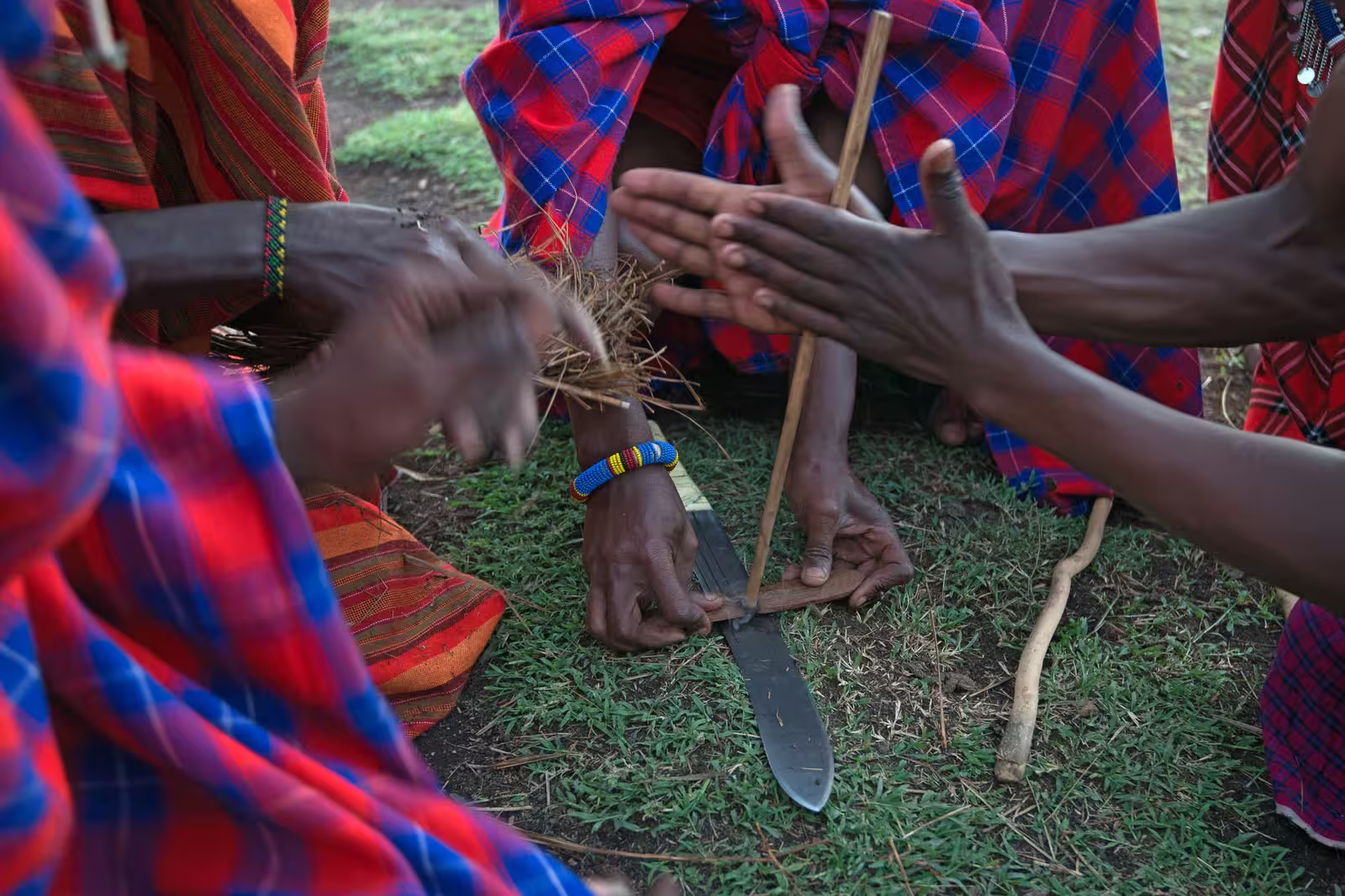
The wildlife is the headline — but Tanzania's human cultures are at least as rich. The Maasai are perhaps the most internationally recognised African people, semi-nomadic cattle herders whose distinctive red shukas, beadwork, and warrior traditions have endured into the 21st century. The Hadzabe are something rarer still — one of the last hunter-gatherer societies on Earth, who have lived around Lake Eyasi for tens of thousands of years and still hunt with bow and arrow. The Datoga, neighbours of the Hadzabe, are master blacksmiths who supply the Hadzabe's arrowheads.
These are working cultures, not performances. Our cultural visits are designed in close partnership with the communities themselves — they take place in actual homesteads, the proceeds go to the families and communities being visited, and visitors are guests rather than tourists. A typical visit is a half day, includes meaningful time with elders and children, often involves participation (cooking, hunting, dancing), and leaves visitors with a perspective they did not arrive with.
We avoid the tourist-village cultural performances that have unfortunately developed around Arusha and the northern parks. The real Maasai do not live in mock villages charging admission — they live in real bomas across the Maasai Steppe, with real families. Our network of community partners gives us access to genuine encounters that our travellers consistently rank as the highlight of their trip.
What makes thisexperience itself
The Maasaikicheche · pastoralists
The Hadzabelake eyasi · hunter-gatherers
The Datogalake eyasi · blacksmiths
Local guidescommunity-led
The best parksfor this experience
Lake Eyasi (Hadzabe + Datoga)
Both communities live in the Lake Eyasi basin
Explore park → 02Loliondo (Maasai)
Authentic Maasai pastoralist communities
Explore park → 03Engaruka (Maasai)
Maasai villages on the Ngorongoro highlands
Explore park → 04Mto wa Mbu
Multi-ethnic village near Lake Manyara — 120+ tribes in one town
Explore park →Cultural visits are available year-round. Hadzabe morning hunts are best in dry season (June-October) when game tracks are clearer. Maasai bomas welcome visitors any season — though avoid heavy rain (April-May) when roads become difficult.
What thisactually involves
Photography is welcome but please ask permission first. Many community members will gladly pose; some prefer not to be photographed.
Things travellersoften ask
Ready forcultural tours?
Tell us your dates and what matters most. We design every Cultural Tours itinerary personally.