The Serengeti is not a destination you visit. It is a rhythm you enter — an ancient, unbroken cycle of birth and migration, predator and prey, sun and storm, that has played out across these golden plains for more than two million years. To stand on its short-grass plains at dawn, to watch a million animals move as a single body across the horizon, is to feel time itself slow into something older than language.
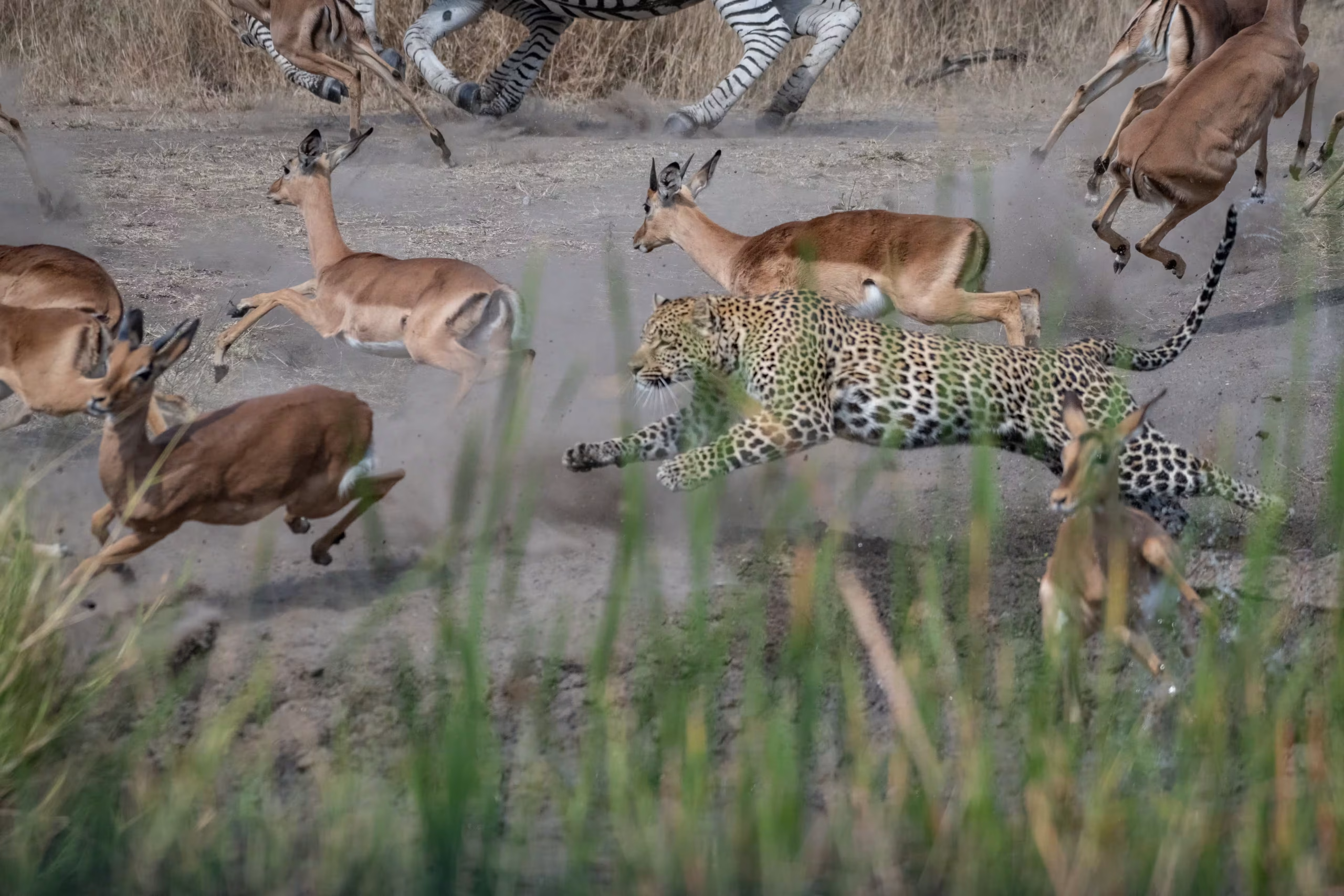
Stretching across 14,750 square kilometres of northern Tanzania, the Serengeti is one of the last great wildernesses on Earth — a place where wildlife still moves in numbers that defy comprehension. One and a half million wildebeest. Two hundred and fifty thousand zebra. Three hundred and fifty thousand gazelle. They follow rain and grass in the largest mammal migration the planet has ever known, drawing lions, cheetahs, hyenas, crocodiles and the most patient of leopards into the most extraordinary theatre of survival in the natural world.
"There is more wildlife within sight of a single acacia tree here than in some entire countries. The Serengeti makes you understand what the world was before us — and what it could still be."
But the Serengeti is more than its migration. It is kopjes — ancient granite outcrops that rise from the savannah like islands in a sea of grass, harbouring leopards, hyrax and lions who have made these rocks their thrones for generations. It is acacia woodlands where elephants gather at dusk. It is rivers thick with hippos, plains punctuated by lone umbrella trees, and skies so vast they seem to belong to another era entirely.
For the Maasai, who have shared these lands for centuries, Serengeti — Siringitu — means "the place where the land moves on forever." There is no better description. Nothing prepares you for the scale, the silence, the sheer volume of life. You do not visit the Serengeti. You bear witness to it.




 Activity
01