- First-time high-altitude trekkers
- Travellers who want to give themselves the best chance of summit
- Photographers — most diverse scenery
Kilimanjaro & Mount Meru
The roof of
Africa
on your own two feet
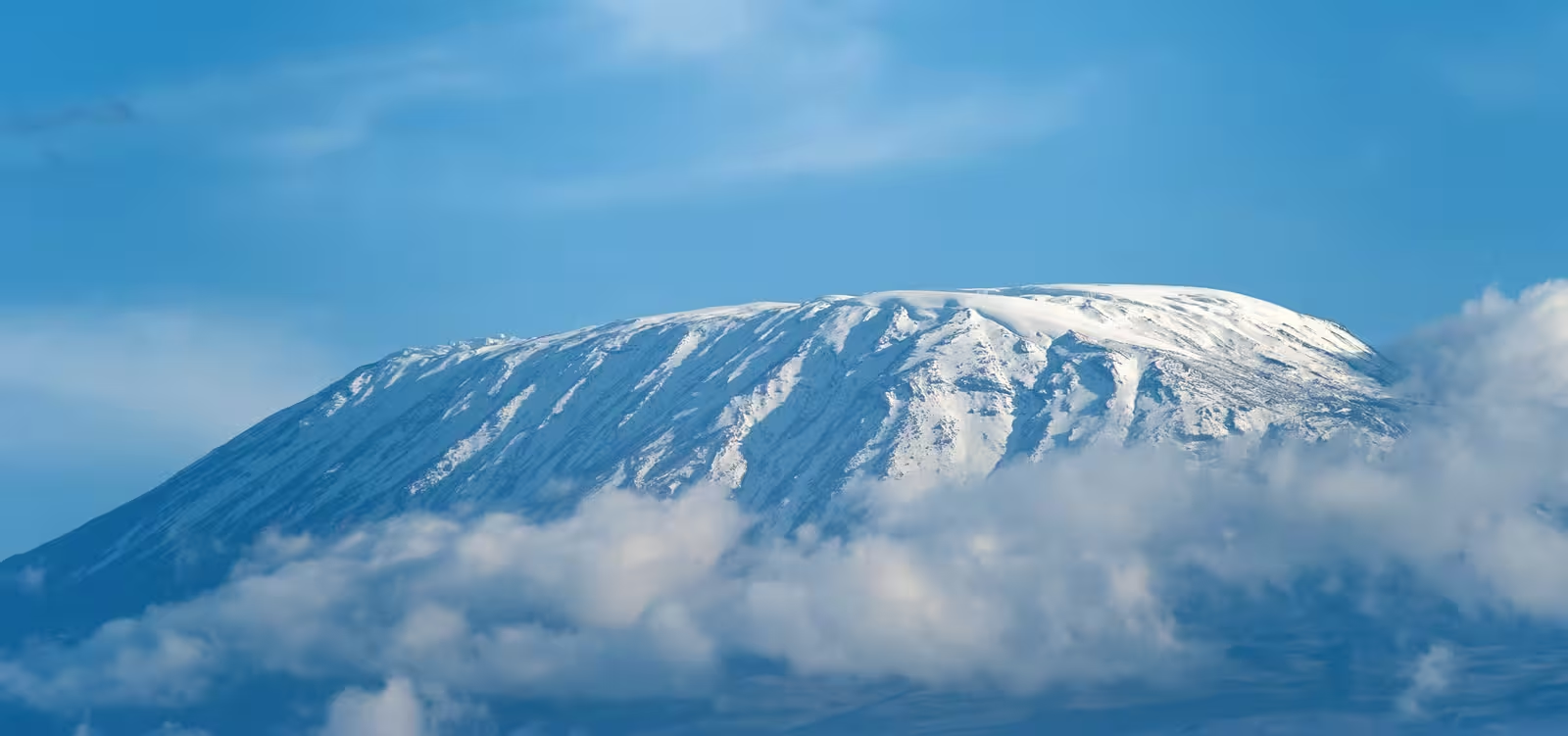
Mount Kilimanjaro — 5,895 metres, the highest point in Africa, the world's tallest free-standing mountain. Mount Meru — 4,566 metres, Tanzania's second-highest, a magnificent and underappreciated acclimatisation peak. Two mountains, one extraordinary climbing region.
5,895 mKilimanjaro summit
4,566 mMount Meru summit
5-9 daysClimb duration
Year-roundClimbing season
90-95%Summit success rate
Africa's rooftop
The mountain thatchanges you
Kilimanjaro is unlike any other major peak. You do not need ropes, ice axes, or technical training. What you need is patience, fitness, and respect for altitude. Tens of thousands of ordinary people summit every year. Many more turn back at 5,000 metres — exhausted, dizzy, oxygen-starved — and never make Uhuru Peak. The difference is rarely fitness. It is almost always acclimatisation strategy.
The right route, the right pace, the right team — these determine whether you stand on the summit at sunrise or whether you remember Kilimanjaro as the one that beat you. The pages that follow cover all six commercial routes, day-by-day breakdowns of our recommended Lemosho itinerary, training and preparation guidance, and a section on Mount Meru — the magnificent secondary peak that doubles as the best Kilimanjaro acclimatisation climb in Africa.
"Mountains have a way of dealing with overconfidence. Kilimanjaro is the perfect example — it looks easy. Until day five, when it isn't."
— A Heaven Getaway senior guide
We have run over 800 successful Kilimanjaro climbs since founding the company. Our guides have summited more than 200 times each. We are KPAP partners, paying porters above industry minimum, and we maintain a 90-95% summit rate on 7+ day routes. Choose carefully — the route you pick matters more than almost any other decision about your climb.
Choose your route
Six routes,very different journeys
Each Kilimanjaro route has its own character, scenery, success rate and atmosphere. Below: an honest breakdown to help you choose.
01
Lemosho Routethe connoisseur's route
Our most-recommended route. Long enough to acclimatise properly, scenic enough to be unforgettable, with the highest success rate of any Kilimanjaro route.
Days7-8 days
Distance70 km
Success rate90-95%
SleepsTented camping
Approaches from the western Lemosho Glades, traversing the Shira Plateau before joining the Machame route. Offers the best acclimatisation profile, dramatic scenery, and lower crowds than Machame. The extra day costs more but is worth every dollar — both for enjoyment and summit success.
Best for
02
Machame Routethe whiskey route
The most popular route — "whiskey" being the local nickname for its tougher reputation. Steep terrain, dramatic Barranco Wall, well-trodden path with the heaviest traffic.
Days6-7 days
Distance62 km
Success rate85-90%
SleepsTented camping
Approaches from the south via the Machame Gate. Crosses the Shira Plateau, then climbs the famous Barranco Wall — a thrilling scramble that's as fun as it is intimidating. Six-day version is rushed; seven-day is much better.
Best for
- Travellers on shorter timelines
- Those who don't mind crowds
- Anyone wanting the iconic Barranco Wall
03
Marangu Routethe "Coca-Cola" route
The original and only route with hut accommodation (no tents). Often called the easiest — but the shortest acclimatisation profile means it has the lowest success rate.
Days5-6 days
Distance72 km
Success rate60-70%
SleepsMountain huts
The classic Kilimanjaro climb since the 1930s. Same route up and down. Hut accommodation appeals to those who don't want to camp. But the shorter profile means many climbers fail to summit. We rarely recommend this route.
Best for
- Climbers who prefer huts to tents
- Those genuinely short on time
- Travellers who do not mind a lower summit chance
04
Rongai Routethe wild north
The only route approaching from the north (Kenya side). Drier, less travelled, and the only route to traverse the gentler northern slopes.
Days6-7 days
Distance73 km
Success rate80-85%
SleepsTented camping
Quieter than the southern routes. Approaches via cave camps and the eastern Saddle. Best in the wet season (the southern routes get muddier). Less varied scenery but blissfully uncrowded.
Best for
- Climbers seeking solitude
- Wet-season climbs
- Those who have done Kili before and want a different angle
05
Northern Circuit Routethe longest, the best
The newest official route and quite possibly the best. Takes 9 days, circles the mountain at altitude, offers superb acclimatisation and unmatched success rates.
Days9 days
Distance98 km
Success rate95%+
SleepsTented camping
Combines the Lemosho approach with a unique high-altitude traverse of Kilimanjaro's less-visited northern slopes. The extra time at altitude makes for the best acclimatisation of any route — and arguably the best overall experience.
Best for
- Anyone with the time and budget
- Climbers prioritising summit success
- Those who want the most varied scenery
06
Umbwe Routethe steepest
The shortest, steepest, and least-frequented route. For experienced mountaineers only — fast altitude gain means lower summit chances unless you're already well-acclimatised.
Days6 days
Distance53 km
Success rate70-75%
SleepsTented camping
A direct, demanding line up the southern slopes. Steep ascent through the rainforest. Beautiful, dramatic, and very challenging. We only recommend Umbwe for experienced high-altitude climbers.
Best for
- Experienced high-altitude climbers
- Those who have already trekked above 4,000m
- Climbers seeking a physical challenge
Side by side
The routes,compared
| Route | Days | Distance | Difficulty | Success rate | Crowds | Scenery |
|---|---|---|---|---|---|---|
| Lemosho | 7-8 | 70 km | Moderate | 90-95% | Moderate | Excellent |
| Machame | 6-7 | 62 km | Moderate-Hard | 85-90% | Heavy | Excellent |
| Marangu | 5-6 | 72 km | Moderate | 60-70% | Moderate | Limited |
| Rongai | 6-7 | 73 km | Moderate | 80-85% | Quiet | Different |
| Northern Circuit | 9 | 98 km | Moderate | 95%+ | Quiet | Outstanding |
| Umbwe | 6 | 53 km | Very hard | 70-75% | Quiet | Spectacular |
Day by day
The Lemosho8-day itinerary
01Day 1
Arrival in Arusha
Arrive Kilimanjaro Airport, transfer to Arusha. Pre-climb briefing, gear check, equipment rental if needed. Final dinner before the mountain.
Altitude1,400m
SleepHotel
02Day 2
Londorossi Gate → Mti Mkubwa
Drive to Londorossi Gate (2,250m). Trek 3 hours through montane rainforest to Mti Mkubwa (Big Tree) camp. Easy first day, gentle altitude gain.
Trekking3-4 hours
Altitude2,820m
SleepTented camp
03Day 3
Mti Mkubwa → Shira 1
Climb through heather moorland onto the Shira Plateau. Long but beautiful day. First glimpses of Kibo (Kilimanjaro's summit dome).
Trekking6-7 hours
Altitude3,505m
SleepTented camp
04Day 4
Shira 1 → Shira 2
Acclimatisation day across the Shira Plateau. Optional climb to Shira Cathedral. Easy walking at altitude — ideal for acclimatisation.
Trekking4-5 hours
Altitude3,845m
SleepTented camp
05Day 5
Shira 2 → Lava Tower → Barranco
Climb-high, sleep-low day. Up to Lava Tower (4,640m) for lunch, then descend to Barranco Camp. Crucial acclimatisation day.
Trekking6-7 hours
Altitude3,960m
SleepTented camp
06Day 6
Barranco → Karanga
Cross the iconic Barranco Wall — a fun morning scramble (no technical climbing). Onward to Karanga Camp. Short but spectacular.
Trekking4-5 hours
Altitude4,035m
SleepTented camp
07Day 7
Karanga → Barafu
Climb to Barafu Camp, the summit base. Early dinner, sleep before midnight summit attempt. Rest is critical here.
Trekking3-4 hours
Altitude4,673m
SleepTented camp
08Day 8
Summit Day → Mweka
Midnight start. 6-7 hour climb to Stella Point and Uhuru Peak (5,895m). Descend to Mweka Camp via Barafu. The longest, hardest, most rewarding day of your life.
Trekking12-14 hours
Altitude5,895m peak
SleepTented camp
09Day 9
Mweka → Arusha
Final descent through rainforest to Mweka Gate. Certificates. Transfer to Arusha. Celebration dinner. Showers. Sleep.
Trekking3-4 hours
Altitude1,800m
SleepHotel
4,566 m
Mount Meru · 4 days
Mount Meru
The mountainno one talks about
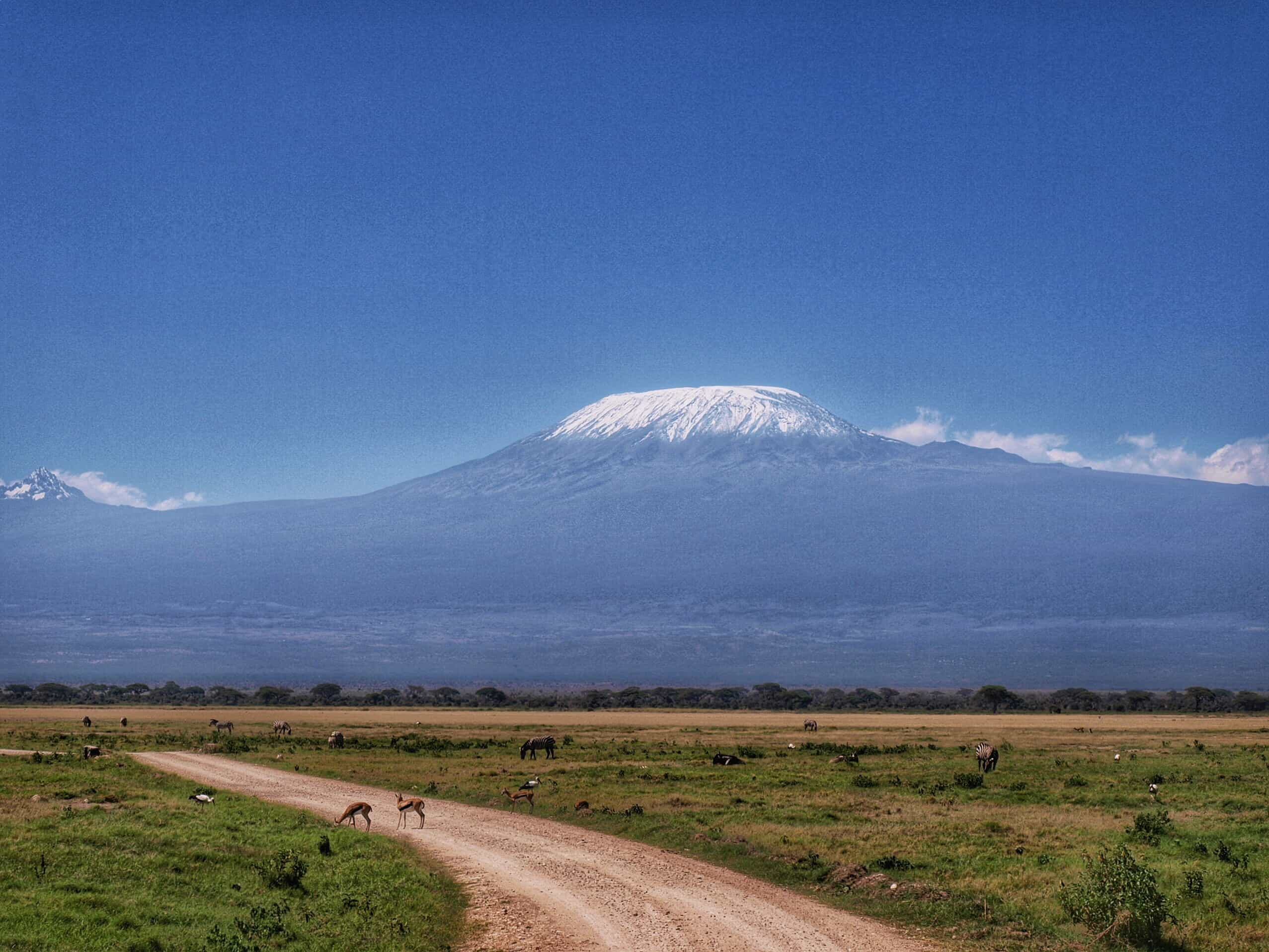
Just 70 kilometres from Kilimanjaro, Mount Meru is Tanzania's second-highest mountain and arguably its most beautiful. A perfectly conical stratovolcano rising from the Arusha National Park, with wildlife on the lower slopes — buffalo, giraffe, sometimes elephant — and one of the most dramatic ridge walks in Africa near the summit.
Most travellers ignore Meru in favour of Kilimanjaro. That is a mistake. Meru is the best acclimatisation climb on the continent — 4,566 metres, completable in 3-4 days, with wildlife encounters Kili cannot match. Many of our most successful Kilimanjaro summits come after a Meru pre-climb.
4,566Metres summit
3-4Days to climb
85%+Success rate
$1,400From per person
Best combined with Kilimanjaro — Meru first as acclimatisation, 2-3 days rest, then Kilimanjaro. This is the climb sequence professional mountaineers use, and it has the highest success rate of any combination.
How to prepare
Six thingsthat matter most
Successful Kilimanjaro climbs come down to a small number of factors. Get these right and your odds improve enormously.
01
Physical preparationstarts months before
Kilimanjaro is not technical, but it is long, cold, and high. Train accordingly. The fitter you are, the more you will enjoy it.
- 3-4 months of cardio training (running, cycling, hiking)
- Long weekend hikes with a loaded pack (8-10 kg)
- Stair climbing or step training for the steep sections
- Mental preparation — you will feel terrible at altitude, that's normal
02
Altitude & acclimatisationthe real challenge
Kilimanjaro's success rate is largely determined by your acclimatisation profile. More days = more time at altitude = higher success.
- Choose 7+ day routes (Lemosho 8-day or Northern Circuit 9-day are ideal)
- Diamox (acetazolamide) significantly improves acclimatisation — discuss with your doctor
- Hydration is critical: 4-5 litres per day from day 1
- "Pole pole" (slowly slowly) — walk at half your normal pace
03
Gear & packingrent or buy?
You need serious gear: -10°C sleeping bag, waterproof shell, layered clothing, sturdy boots. We can rent everything in Arusha, but quality varies.
- Boots — must be well broken in (avoid blisters at altitude)
- Layered clothing system (base, mid, shell)
- -10°C sleeping bag (rentable in Arusha)
- Trekking poles (essential for the descent)
- Headlamp with spare batteries (for summit night)
- We send a detailed packing list with every booking
04
Best time to climbtwo windows
Kilimanjaro can be climbed year-round, but two windows are clearly best: January-March and June-October. Avoid April-May (long rains) and November (short rains).
- January – March: Clear skies, cold nights, fewer climbers
- June – October: Peak season — warmest temps, busiest
- April – May: Avoid (long rains, muddy slippery trails)
- November: Avoid (short rains, less reliable visibility)
- Summit day weather is unpredictable in any month
05
Combining with safarithe natural pairing
Most climbers combine Kilimanjaro with a Tanzania safari. Order matters — climb first while fresh, safari to recover.
- Climb first, safari second (climb is harder, easier to enjoy bush from a vehicle)
- Add 2-3 rest days between climb and safari
- Northern circuit safari (Tarangire, Ngorongoro, Serengeti) starts 1.5 hrs from Arusha
- Many climbers add Zanzibar at the end — the perfect reset
06
The team behind youmatters more than the route
Your guides, cooks, and porters make the climb. We use experienced senior guides, full mountain crews, and pay porters above the KPAP fair-wage standard.
- Lead guide + assistant guide ratio is 1 per 2-3 climbers
- Mountain cook prepares 3 fresh meals daily
- Porters carry equipment, tents, cooking gear (your daypack is yours)
- We are KPAP partners — porters paid above industry minimum
- Pulse oximeter checks twice daily for altitude monitoring
Ready to climb
Begin yourascent
Whether Kilimanjaro alone, Meru alone, or the classic combination of both — tell us your dates and your goals. We design every climb personally.